





Reproducible research is like running a grand orchestra. Every instrument must be tuned, every note must be placed at the right tempo, and every performer must follow the same sheet of music. When analysts and engineers create models in isolation, they often produce results that resemble improvised solos. Beautiful for the moment, but difficult to repeat and nearly impossible to scale. This is where reproducible research practices step in, ensuring that the melody of a project never depends on a single musician. Many learners realise this when they explore foundational work through a data scientist course, which is where they first encounter the value of standardisation.
The Symphony of Documentation
Imagine walking into a studio where a masterpiece was once recorded, only to find missing notes, unlabeled knobs, and faded markings on the console. Reproducing the sound becomes a near archaeological expedition. In research and modelling, this happens when documentation is incomplete or siloed.
Good documentation must speak like a diary written for the future. It must reveal the intention behind every parameter, every experimental branch, every tuning attempt. This level of clarity is often highlighted in learning paths like the data science course in Mumbai, where students are taught that documentation is not a formality but a survival skill.
To achieve reproducibility, model documentation should include version histories, dependency lists, rationale for design decisions, known limitations, and clear instructions to rebuild the entire workflow. When a project has this level of transparency, any researcher can step in and recreate the performance without guesswork.
Conda: A Toolkit for Research Consistency
Consider a travelling theatre troupe that needs to perform the same play across dozens of cities. Every stage must be arranged exactly as the creators imagined it, from props to lighting. Conda plays this behind the scenes role in research. It ensures that Python versions, libraries, and supporting tools stay consistent across machines.
When teams create environment files using Conda, they produce a portable recipe. Anyone using this recipe can instantly recreate the identical set of ingredients. This prevents the dreaded scenario where models work perfectly on one laptop but collapse as soon as they migrate to another.
Conda environments also allow isolated experimentation. Researchers can create multiple versions of toolsets without affecting their main system. This is invaluable for teams that run parallel experiments or try alternative models while preserving the original baseline.
Docker: Packaging the Entire Stage
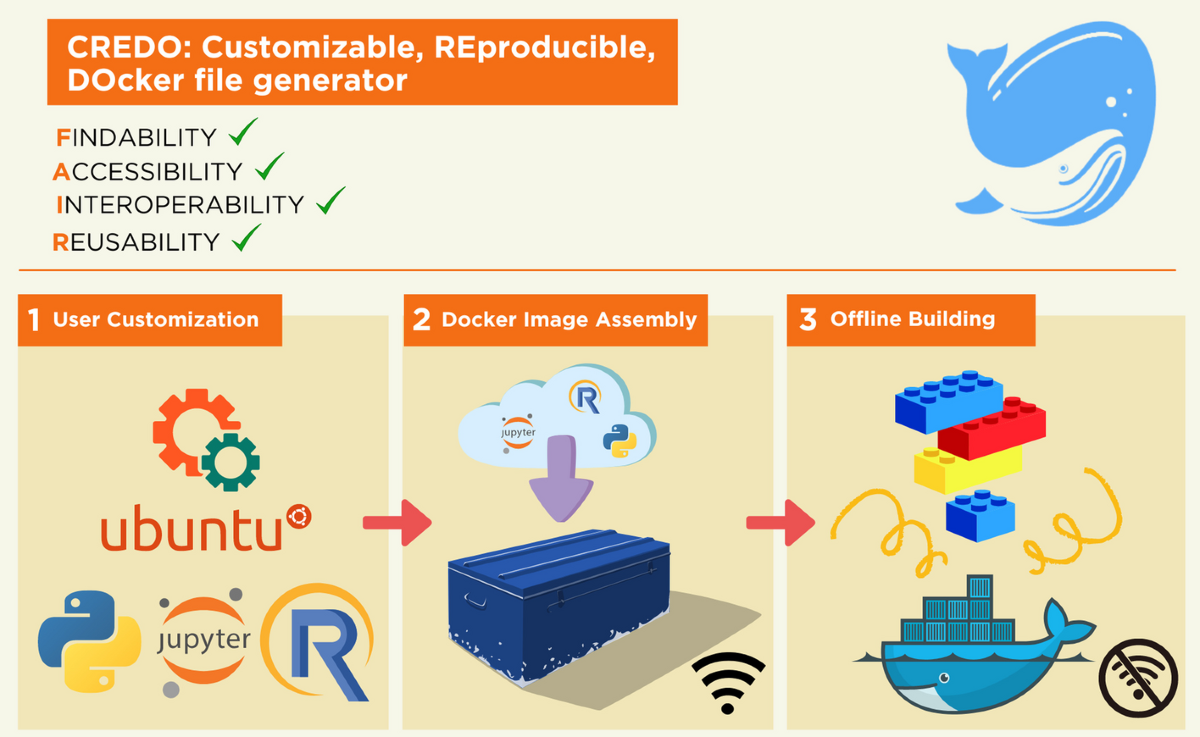
If Conda is responsible for props, Docker builds the entire theatre. It packages not only code and dependencies but operating system layers, ensuring that the environment itself becomes a stable container. This eliminates the subtle discrepancies that often arise from machine configurations.
Docker images act like shipping containers ready for deployment. Regardless of where they land, the contents remain untouched. Teams can test, validate, and even deploy models knowing they will behave identically across cloud systems, local machines, or production servers.
A well constructed Dockerfile becomes the backbone of reproducible research. It contains every step needed to assemble the environment, ensuring nothing is left to interpretation. This is a cornerstone habit that many professionals develop early, often encouraged during advanced training in a data scientist course, where environment management is treated as a foundational competency.
Bringing Order to Collaborative Chaos
Large organisations often resemble bustling train stations. Diverse teams work on parallel tracks, each contributing to a larger ecosystem. Without standardisation, models collide or derail when integrations begin. Reproducible research brings order to this chaos by providing the equivalent of a central timetable.
With Conda or Docker, teams maintain a single source of truth for environments. Repositories stay clean, version histories remain traceable, and onboarding becomes a seamless experience. New members do not waste time reconstructing experimental setups from scratch. Instead, they step directly into a functioning ecosystem, similar to the structured progression learners encounter in a data science course in Mumbai, where collaborative discipline is emphasised throughout.
The Future: Automated, Auditable, and Scalable Research
The road ahead belongs to organisations that can trace, audit, and reuse models with precision. Reproducibility is evolving from a best practice to a regulatory expectation. Automated pipelines now integrate Conda environment files or Docker images directly into CI processes, ensuring that every deployment matches the tested configuration.
Investing in reproducibility ultimately saves time, reduces risk, and builds confidence. It allows teams to scale ideas rather than rebuild them. It turns research from fragile improvisation into a structured performance that can be repeated, inspected, and trusted.
Conclusion
Reproducible research transforms machine learning from a collection of isolated experiments into a cohesive, repeatable craft. With thoughtful documentation, standardised environments, and tools like Conda or Docker, teams preserve not only the technical essence of their work but its interpretability and longevity. In a world where innovation accelerates each day, reproducibility ensures that progress is never lost, and that every model can be recreated with the same precision as the original performance.
Business Name: Data Analytics Academy
Address: Landmark Tiwari Chai, Unit no. 902, 09th Floor, Ashok Premises, Old Nagardas Rd, Nicolas Wadi Rd, Mogra Village, Gundavali Gaothan, Andheri E, Mumbai, Maharashtra 400069, Phone: 095131 73654, Email: elevatedsda@gmail.com.